


Zero Trust vs Traditional Security: Why Enterprises Can’t Rely on Old Fences?
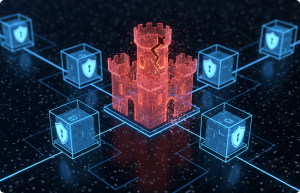
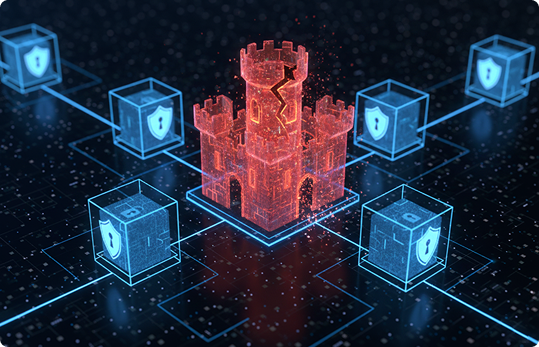
Traditional network security has long been likened to a castle with towering walls—once inside, users and devices are trusted, and the primary goal is to keep threats out. However, the rapid expansion of remote workforces and cloud applications has blurred this clear boundary, rendering legacy perimeter-based solutions like firewalls and VPNs insufficient.
These models assume that users and devices inside the network perimeter are trustworthy, granting broad access with little ongoing verification. But in today’s complex cybersecurity landscape, this approach leaves enterprises vulnerable to insider threats, lateral movement by attackers, and data breaches.
Enter zero trust architecture, a revolutionary approach that transforms enterprise cybersecurity by fundamentally changing how trust is established and maintained. Zero trust operates on the principle of “never trust, always verify,” meaning no user or device—whether inside or outside the corporate network—is trusted by default.
Every access request undergoes strict identity verification, device health checks, and contextual risk assessments before access is granted, creating a dynamic, continuously enforced security posture.
Instead of relying on the fortress-like perimeter of traditional networks, zero trust employs smart, layered access control combined with granular network segmentation—often called microsegmentation—to limit access strictly to what each user or device needs. For example, rather than providing a finance employee working remotely with unrestricted VPN access to the entire corporate network, zero trust ensures they only access the specific applications necessary for their role, fortified with multi-factor authentication and continuous device compliance monitoring.
Likewise, if a contractor’s device is found to be non-compliant or compromised, zero trust instantly isolates it into a secure microsegment or “private waiting room” until remediation occurs, preventing any potential threat from spreading.
This shift goes beyond technology—it represents a cultural and operational transformation.
Zero trust enforces continuous authentication and implements least-privilege access principles, drastically reducing the risk of breaches and insider threats. It also speeds up incident response by limiting attackers’ lateral movements inside the network and provides stronger regulatory compliance support by enforcing and auditing detailed, real-time access controls.
Key differences between traditional network security and zero trust architectures include:
- Trust Model: Traditional security assumes implicit trust for users and devices inside the perimeter; zero trust assumes zero trust everywhere, requiring continuous verification for all access attempts regardless of location.
- Access Controls: Traditional models grant broad access based on network location; zero trust grants minimal necessary access dynamically based on user identity, device posture, and other contextual factors.
- Network Segmentation: Traditional approaches rely on a strong perimeter but have limited internal segmentation; zero trust relies heavily on microsegmentation and isolated secure zones to contain threats.
- Monitoring and Response: Traditional security often has periodic checks and slower breach response; zero trust mandates continuous monitoring and real-time adaptive responses to threats.
- User Authentication: Traditional models typically use static credentials; zero trust mandates multi-factor and adaptive authentication for robust identity assurance.
In the era of hybrid work environments, cloud migrations, and increasingly sophisticated cyber threats, zero trust architecture stands as an essential pillar of resilient enterprise cybersecurity.
It guarantees that every user, every device, and every access attempt is rigorously scrutinized and tightly controlled. This approach not only minimizes the attack surface but also enhances operational agility, reduces the risk of costly breaches, and helps enterprises meet tightening regulatory requirements with confidence.
For organizations ready to evolve beyond outdated perimeter defenses, embracing zero trust means adopting advanced cybersecurity principles like identity verification, microsegmentation, continuous monitoring, and least-privilege access.
This strategic framework transforms network security from a static, castle-and-moat defense into a dynamic, continuously adaptive system—delivering stronger protection, improved compliance, and greater business resilience in today’s complex digital landscape.